China’s high-speed railway (HSR) offers a seamless way to zip between cities like Beijing, Shanghai, Guangzhou and Xi’an at 350 km/h. 2nd Class vs 1st Class on China High-Speed Trains: Which Should You Pick? When booking your tickets on the 12306 app, you will immediately face this dilemma.
While the speed is the same, the experience can be quite different. In this guide, we’ll compare the two most popular seat tiers to help you decide which is best for your China adventure.
1. Seat Layout: Space is the Biggest Factor
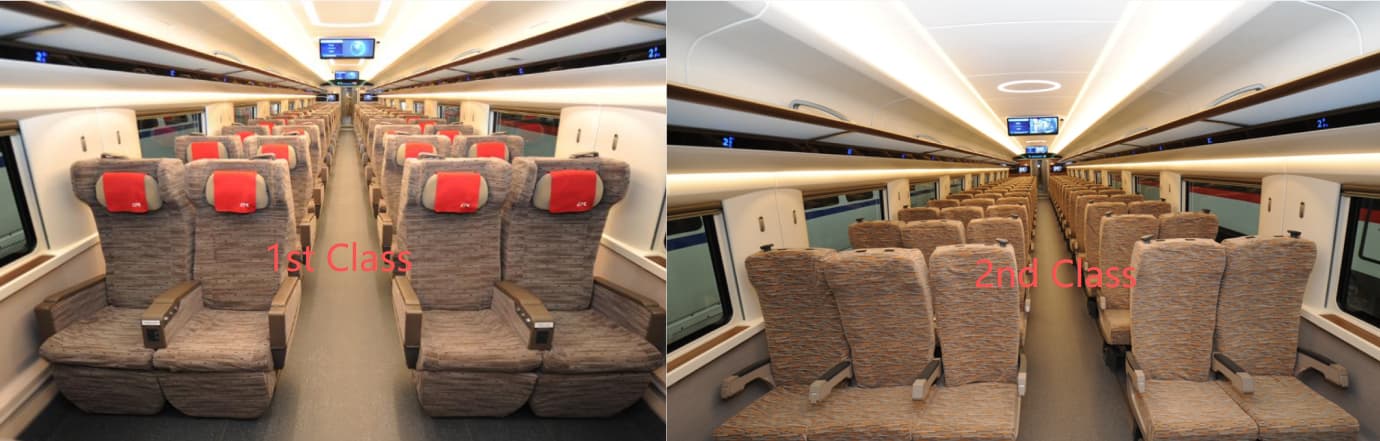
The most immediate difference between the two classes is the seat configuration.
- Second Class (3+2 Layout): Second Class features five seats across the aisle. This means on one side of the aisle, you have three seats (A, B, and C), and on the other, you have two (D and F). While the seats are comfortable, the middle seat (B) can feel a bit snug if the train is fully booked.
- First Class (2+2 Layout): First Class is more exclusive, with only four seats across. This eliminates the dreaded middle seat. Every passenger gets either a window or an aisle seat. The seats themselves are wider, featuring more padding and larger headrests.
2. Comfort and Legroom: Stretching Out
If you are a taller traveler (over 1.8 meters or 6 feet), the difference in legroom is noticeable.
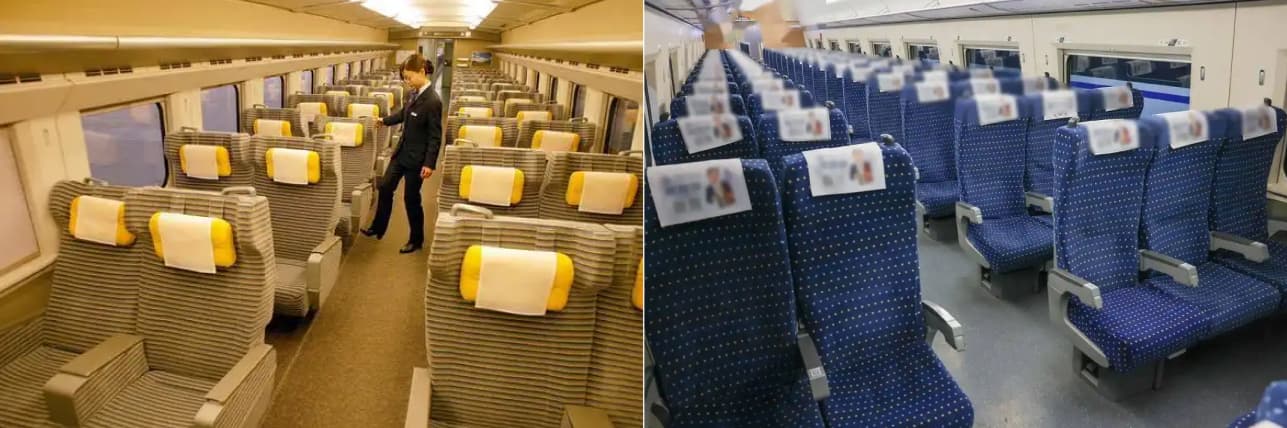
- Second Class: Offers roughly 40 inches (100 cm) of “seat pitch.” This is actually more generous than most international airline economy seats. You can easily fit a backpack at your feet and still have room to move.
- First Class: Steps it up to about 45–50 inches (115–125 cm). You can almost fully extend your legs. Furthermore, First Class seats usually have a deeper recline and a more robust footrest, making it much easier to nap on a 5-hour journey from Beijing to Shanghai.
3. The Atmosphere: Peace vs. Vibrancy
This is an often-overlooked factor for foreign travelers.
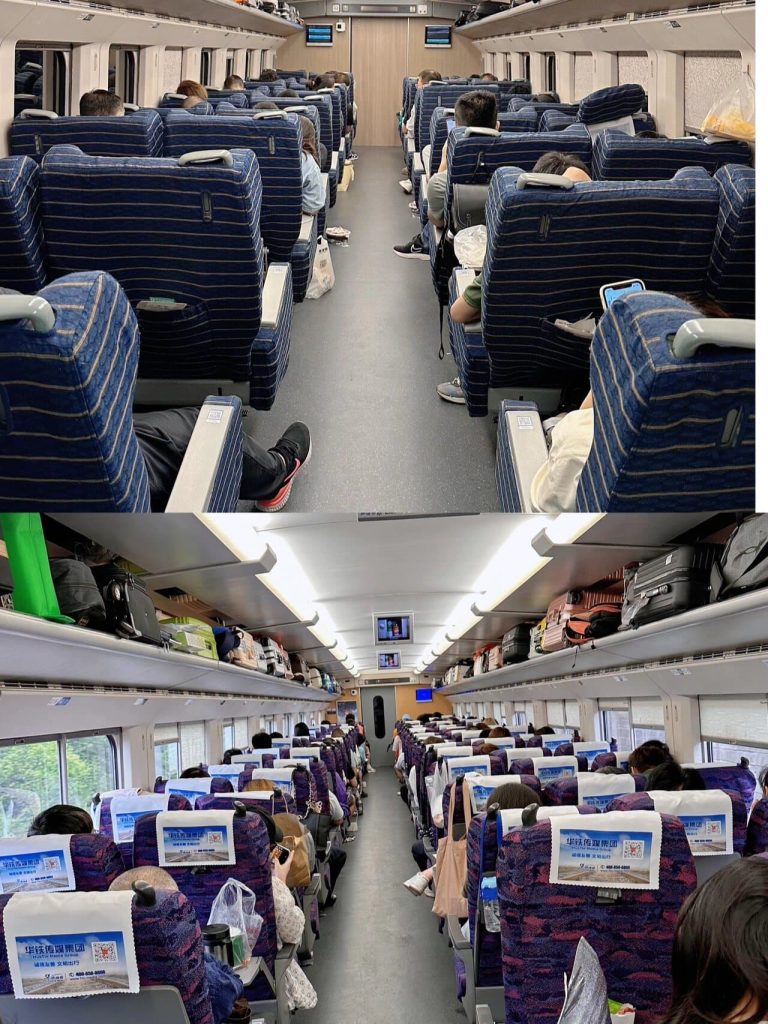
- Second Class: Since it is the most affordable, it is also the most popular. You will experience the “real China” here—families traveling with children, people chatting, and the occasional sound of a TikTok video playing. It’s vibrant and lively, but not always quiet.
- First Class: Generally much quieter. It is favored by business travelers and those willing to pay a premium for silence. If you need to work on your laptop or simply want to read a book in peace, the extra cost for First Class is often worth it for the noise reduction alone.
4. Amenities: What Do You Get?
In 2026, both classes on Fuxing (G-series) trains are well-equipped, but First Class has a few “luxuries”:
- Power Outlets: Both classes have them. In Second Class, you might share an outlet located under the seat. In First Class, outlets are often more conveniently placed in the armrest or on the seatback.
- Tray Tables: Second Class uses a standard fold-down table from the seat in front. First Class tables are often stowed in the armrest, making them more stable for heavy laptops.
- Snacks: On some premier routes, First Class passengers are occasionally served a small box of snacks and a bottle of water, though this is becoming less common. In Second Class, you’ll wait for the snack trolley to pass by.
5. The Price Difference: Is it Worth It?
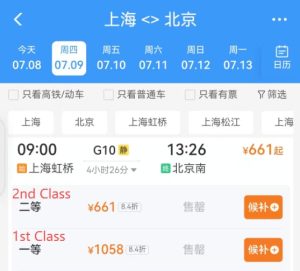
Typically, First Class costs about 60% to 70% more than Second Class.
For example, if a Second Class ticket from Shanghai to Hangzhou is ¥103, the First Class jump to ¥163. On longer routes, like Beijing to Shanghai, a Second Class ticket is roughly ¥661,the First Class jump to ¥1058.
Final Verdict: Which Should You Pick?
Choose Second Class IF:
- You are on a budget (Backpacker style).
- You want to save money to spend on great food at your destination.
- You don’t need the extra comfort.
Choose First Class IF:
- You are sensitive to noise or traveling during a busy holiday like the Chinese New Year.
- You are traveling with elderly parents who need the extra comfort.
2 thoughts on “China High Speed Train Seat Map: 2nd Class vs 1st Class (2026 Guide)”
Comments are closed.